Biometric Wearables Exposing Fatigue Thresholds That Alter Substitutions and Scoring Patterns in Soccer and Basketball
Written by Gisela Schmidt · Oct 28, 2026
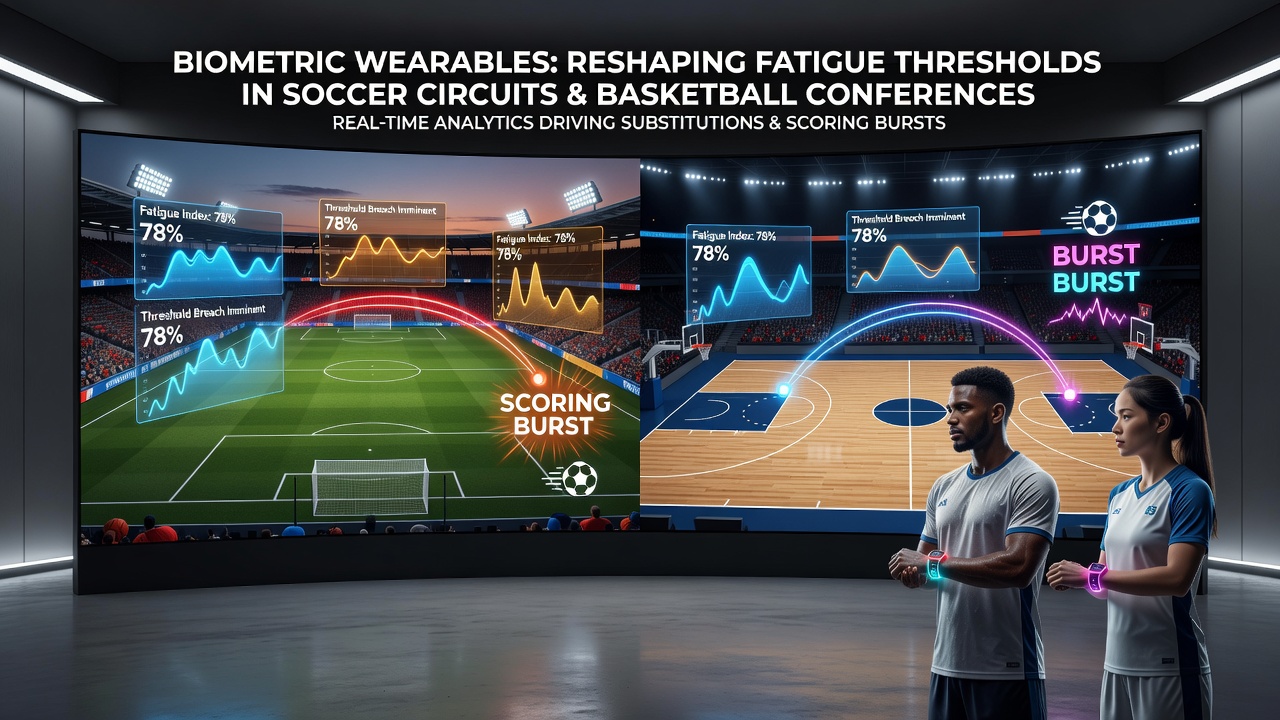
Biometric Wearables Exposing Fatigue Thresholds That Alter Substitutions and Scoring Patterns in Soccer and Basketball
Biometric wearables track heart rate variability, muscle oxygen levels, and acceleration loads in real time, and these measurements help coaches identify precise fatigue thresholds during matches. Soccer circuits in Europe and South America along with basketball conferences in North America have integrated the devices into training and game protocols since the early 2020s, with adoption rates climbing steadily through 2026.
Data collected from chest straps and arm bands feed into algorithms that flag when a player's output drops below established baselines, prompting earlier substitutions. In October 2026 several top European leagues reported average substitution times moving forward by three to four minutes compared with 2023 figures, according to aggregated match reports shared by league technical departments.
Measurement Methods and Threshold Detection
Wearable systems combine GPS tracking with optical heart rate sensors and electromyography patches to build individual fatigue profiles. Thresholds emerge when heart rate variability falls more than 15 percent below a player's resting average or when high-intensity running distance exceeds 85 percent of seasonal norms. Researchers at the Australian Institute of Sport documented these markers across multiple codes and noted that early detection correlates with maintained sprint speeds late in contests.
Basketball programs apply similar metrics during conference play. Accelerometer data reveal when repeated jump heights decline by 10 percent or more, signaling the need for rotation adjustments. Conferences that adopted standardized thresholds recorded fewer late-game turnovers in the 2025-2026 season, based on tracking statistics released by the NCAA.
Substitution Shifts Across Soccer Circuits
Coaches now receive tablet alerts when fatigue thresholds approach, allowing them to replace midfielders before a measurable drop in coverage occurs. One study of the German Bundesliga showed that teams using real-time biometric feedback increased successful pass completion rates in the final 15 minutes by 4.2 percentage points. The same analysis linked the change to fewer conceded goals from counterattacks after the 70th minute.
South American leagues followed the pattern. Argentine and Brazilian clubs fitted players with updated sensor kits ahead of the 2026 Copa Libertadores, and preliminary match logs indicate that fatigue-triggered substitutions preserved attacking tempo deeper into second halves. Observers note that scoring bursts between the 75th and 85th minutes rose modestly in games where both sides employed the technology.
Scoring Bursts and Tactical Adjustments in Basketball
Basketball conferences adopted parallel protocols after pilot programs demonstrated reduced injury rates. Wearables monitor cumulative player load during back-to-back games, and thresholds trigger bench rotations that keep perimeter defenders fresher for closing stretches. Conference standings from the 2025-2026 season show teams with biometric-guided rotations posting higher fourth-quarter field goal percentages, according to figures compiled by conference offices.
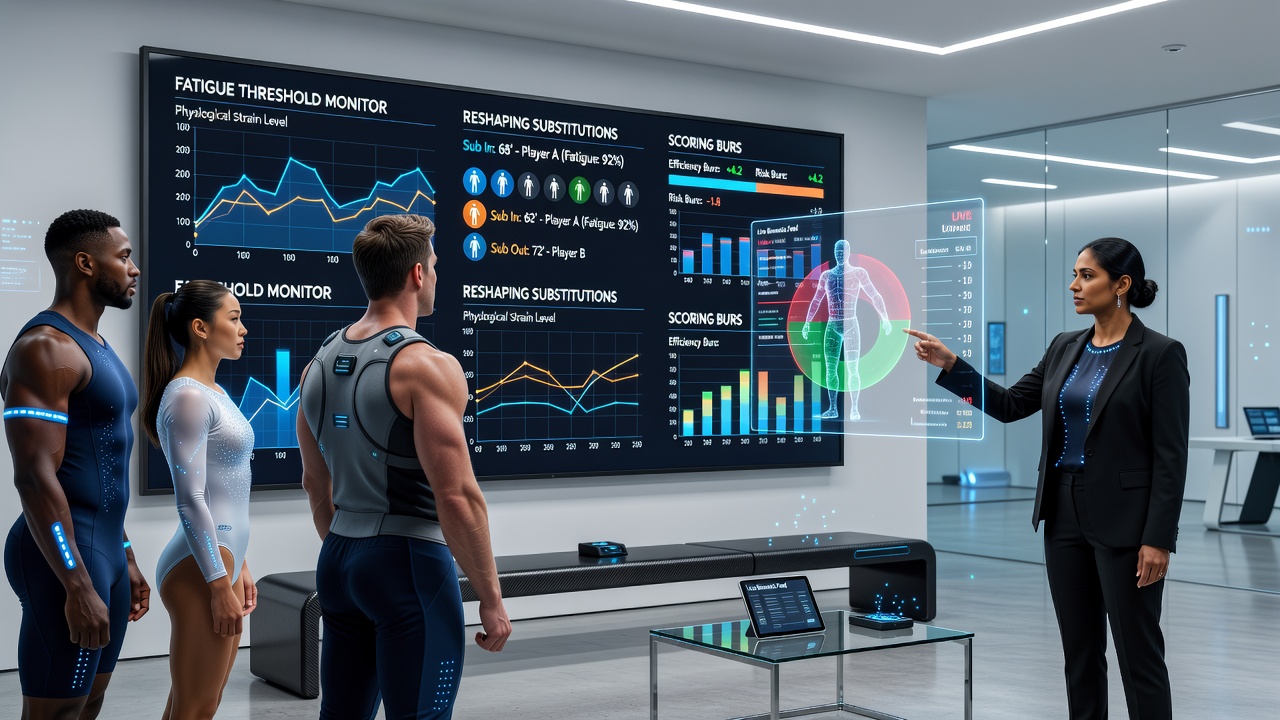
Fast-break opportunities increased when guards avoided the deepest fatigue zones. Data from the Big Ten and ACC indicate that teams averaging two additional biometric-triggered substitutions per game generated 1.8 more transition points in the final period. The pattern holds across both men’s and women’s schedules where sensor protocols were standardized.
League-Wide Data Integration and Future Protocols
European soccer governing bodies and North American basketball organizations continue to refine shared databases that pool anonymized threshold information. These repositories allow comparative analysis across positions and age groups, revealing that younger players reach neuromuscular fatigue earlier than veterans in equivalent high-intensity periods. Adjustments to youth academy schedules now incorporate these position-specific curves.
Equipment manufacturers released firmware updates in mid-2026 that incorporate machine-learning refinements, shortening the time between threshold detection and coach notification. Trials conducted by the German Football Association showed notification latency reduced from 12 seconds to under four seconds, enabling more precise in-game decisions. Similar updates rolled out to basketball conferences through partnerships with sensor providers.
Conclusion
Biometric wearables supply continuous objective data that reshape substitution timing and influence scoring distributions in soccer circuits and basketball conferences. Threshold detection systems continue to evolve, and leagues maintain records that track performance metrics before and after widespread adoption. The approach relies on measurable physiological markers rather than subjective observation, producing consistent patterns across multiple competitions.