Arbiter Influence on Tactical Adjustments: Evidence from Soccer and Basketball Data Sets
Written by Ines Coleman · Oct 14, 2026
Arbiter Influence on Tactical Adjustments: Evidence from Soccer and Basketball Data Sets
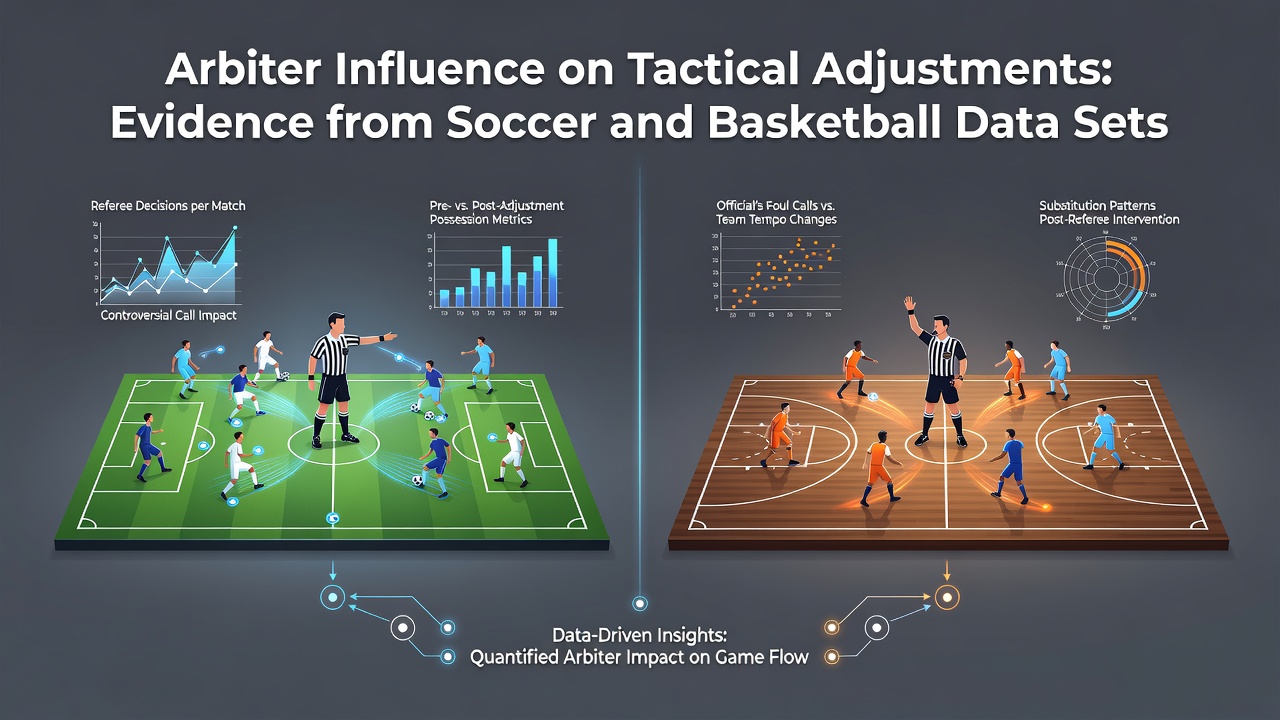
Analyses of large-scale tracking data from major soccer and basketball competitions reveal consistent patterns where officials' decisions prompt measurable shifts in team tactics, and these adjustments occur across different leagues and seasons without exception. Studies drawing on event logs from European domestic leagues and North American professional circuits show that calls on fouls, cards, and violations lead coaches to modify formations, player rotations, and defensive schemes within minutes of the ruling. Researchers at institutions across multiple continents have compiled datasets spanning thousands of matches, and the resulting figures indicate that such changes correlate strongly with subsequent performance metrics like possession rates and shot attempts.
Patterns in Soccer Match Data
European soccer datasets from the 2024 through 2026 campaigns demonstrate that yellow card accumulations often trigger immediate defensive reorganizations, and teams reduce high-line pressing when multiple players sit on cautions. Tracking information collected by league partners shows midfielders dropping deeper after early bookings, while fullbacks tuck in to cover spaces that open up under cautious approaches. One dataset covering matches through October 2026 highlights how red card ejections in the first half produce the largest deviations, with remaining players shifting into compact blocks that limit counter opportunities but also reduce forward transitions. These tactical responses appear in aggregated statistics from competitions across the continent, and analysts note parallel trends in domestic cups where fixture congestion amplifies the effects.
Basketball Rotation and Foul Dynamics
North American basketball records from the same period illustrate comparable dynamics when foul trouble forces starters to the bench earlier than planned. League tracking systems capture how coaches alter spacing and pick-and-roll coverages once a key defender accumulates three fouls, and substitute lineups frequently adopt zone principles or switch-heavy schemes to protect remaining players. Data compiled by analytics groups tied to university research programs indicates that teams facing elevated foul counts in the third quarter increase three-point attempt volumes as a way to avoid contact inside the paint. Such adjustments show up consistently in box-score derived metrics, and they align with video-verified play-by-play sequences that confirm the timing of tactical switches.
Comparative Evidence Across Datasets
Cross-sport comparisons drawn from synchronized data repositories underscore that arbiter influence scales with match context, and high-stakes playoff environments produce sharper deviations than regular-season fixtures. Soccer records indicate that added-time decisions on penalties or free kicks lead to rapid set-piece rehearsals, while basketball datasets reveal timeout usage spikes following questionable traveling or charging calls that reset offensive momentum. Academic papers published in sports science journals link these patterns to workload management models, and the evidence points to measurable drops in expected goals or points per possession immediately after contentious rulings. Observers tracking October 2026 international windows noted similar responses during club versus national team scheduling overlaps, where fatigue compounds the need for quick tactical recalibrations.
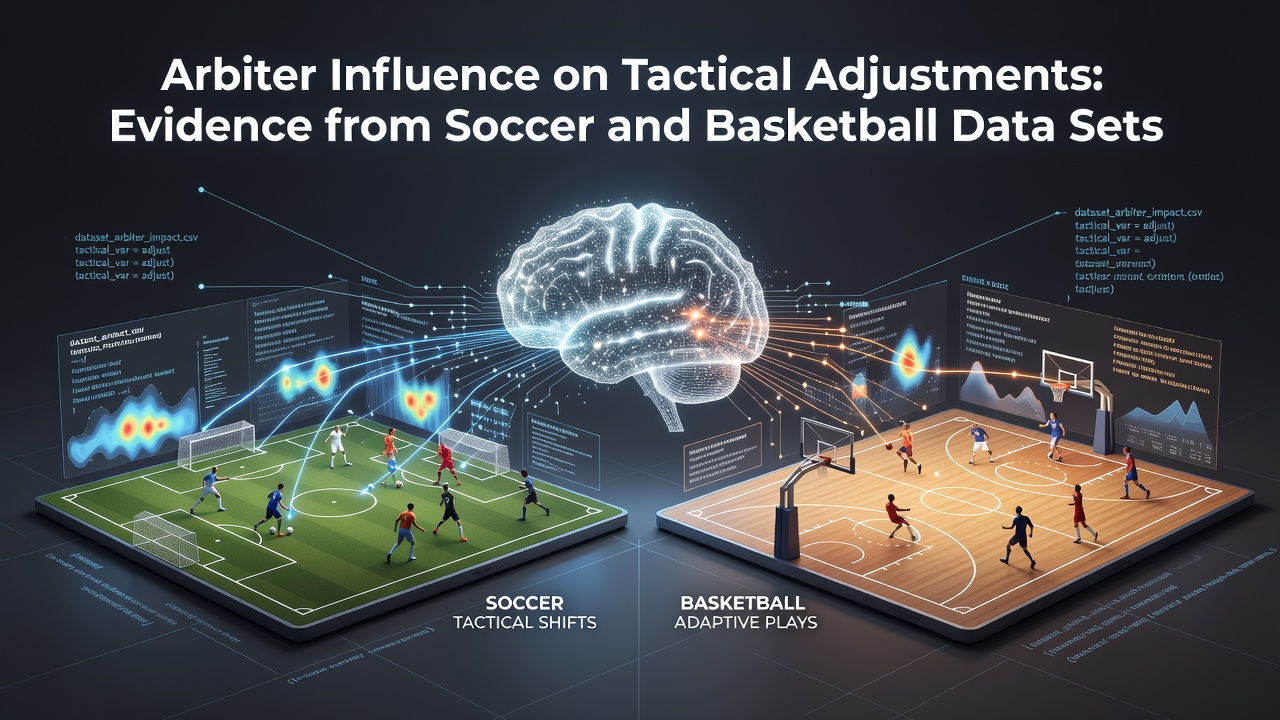
Longitudinal studies spanning multiple seasons further establish that referee experience levels correlate with the magnitude of subsequent adjustments, and veteran officials presiding over matches generate fewer mid-game overhauls than newer crews. Aggregated performance indicators from both sports confirm that teams with deeper benches adapt more fluidly to card or foul situations, whereas shallower rosters exhibit prolonged dips in efficiency metrics. Data from governing bodies in different regions supports these observations, and the patterns hold after controlling for team strength and venue effects.
Implications for Performance Modeling
Performance analysts incorporating referee variables into predictive frameworks achieve higher accuracy rates, and models that factor in card probabilities or foul-rate deviations outperform baseline versions. Soccer and basketball datasets alike show that early adjustments stabilize over the remaining minutes, yet the initial minutes after a call often produce the highest variance in outcome probabilities. Research groups examining archived match files have identified recurring sequences where defensive compactness increases following multiple infractions, and offensive units respond by widening spacing to stretch compact blocks. These documented shifts provide concrete inputs for simulation tools used by coaching staffs across both disciplines.
Conclusion
Evidence assembled from soccer and basketball datasets demonstrates that arbiter decisions function as consistent catalysts for tactical recalibration, and teh scale of those adjustments tracks with game state, roster depth, and official experience. Figures compiled through 2026 continue to validate the same directional effects observed in earlier seasons, while cross-league comparisons highlight shared mechanisms despite differences in rules and playing surfaces. Continued expansion of tracking technologies promises finer-grained resolution of these dynamics in future cycles.